






The glorious noise of Sonic Youth’s Diamond Seas
By NICK TAVARES
STATIC and FEEDBACK Editor
"Thank you for your feedback"
“No, thank you for your feedback."
The sounds reverberating from my stereo the past few days must have seem insane to anyone passing by, but I swear there is something beautiful about it. Here, following Thurston Moore and Lee Ranaldo’s quick pleasantries above, Sonic Youth has taken their guitars and thrown them into amps and against microphone polls and stage floors and whatever else was at their disposal, and created the most glorious racket possible. And they've done this over and over and over. Twenty minutes of feedback, on repeat, praise be.
I'll explain.
This past Saturday was Record Store Day. I'm long past dealing with crowds for this event, and I was never the type to line up for its limited releases. But I do love going down to my local shop, so I’ve taken the same approach the past few years — I head down in the afternoon and see what the gods have left behind for me.
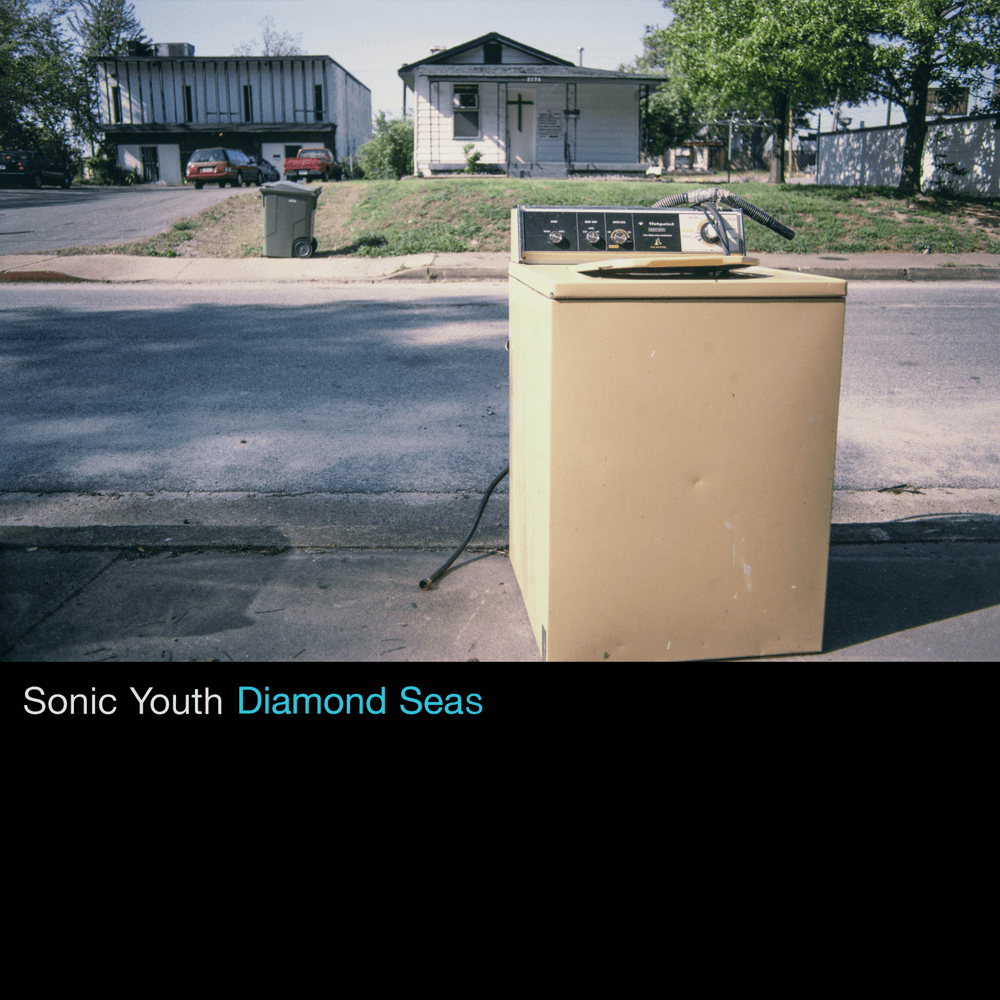
There was still plenty of great stuff available, of course. I walked out with a bundle of four LPs under my arm, but the only one specific to 2026's event was Diamond Seas, a take on Sonic Youth's "The Diamond Sea," plunderphonically orchestrated by John Oswald. Much like he did on 1994's Grayfolded, where he took dozens of live takes of the Grateful Dead's "Dark Star" and turned it into a two-hour mind-meld of spacey jamming, Oswald has grabbed 32 live versions of "The Diamond Sea" from 1995 and 1996 and filled two sides of vinyl with feedback-drenched elegance.
I understand the audience may be narrowed here, in that I'm not only singling out Sonic Youth fans, but the subset therein who also loved this band's ability to manipulate sound and the very electronic elements that surround the stage and the audience. "The Diamond Sea" has always held its own mythical status within that band, just as "Dark Star" did for the Dead. When it first appeared in it's 19:36 runtime at the end of their 1995 album Washing Machine, it was the culmination of nearly 15 years of exploring the weight and power of aural distortion, simultaneously stretched out over the expanse of a side of vinyl while also condensed within the format of a conventional song structure. The 5:29 edit of the song, eschewing its feedback-drenched bulk, is one of their more enduring tunes. But, to drive the point home, the single also included the track in its full, unedited 25:50 glory.
Here, all this is taken to its logically extreme limit. With 32 recordings to play with, Oswald makes use of them all, dipping and diving between takes and audio fidelity to let the sound of each venue have a moment to interplay with the others.
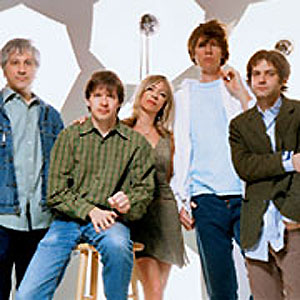
The sonic experimentation here — in its studio take, the live versions or this gigantic edit — was intended to explore how sound changes and interacts with itself depending on the environment. Moore, Ranaldo and Kim Gordon would manipulate their guitars while drummer Steve Shelley laid the foundation beneath, fiddling and twirling with knobs and settings as the situation required. The way the amps blare and interact with a guitar's pickups and pedals can vary from space to space, bouncing off the walls and intermingling with the other instruments in a way that is inherently unique to that moment.
And this is where it ceases to be noise and becomes a composition unto itself. After so many years of manipulating fuzz and delay pedals and amp settings and the limits of magnetic poles, the band had reached a pinnacle by the time they developed "The Diamond Sea." So it became the centerpiece of that album, and the climax of the ensuing Washing Machine tour. And the frequencies conjured here, within the broad confines of the song, seem to reach into the soul somehow. The power present here is almost overwhelming. Oswald has taken what was already a nightly epic performance and created a world where they can all simultaneously intermingle and become a free-standing statement.
It all takes me back to the memory of seeing them live. I've long been on the record that Sonic Youth was the best live band I've ever seen, and that came down to how in control they were of their every move, even as they were consciously letting go of control in search of a new sensational fix. The first time I saw them, they were immediately overwhelming as they rattled Boston's old Avalon Ballroom, creating walls of anarchy and stopping on a dime whenever it suited them. They were in complete control, when they felt like it. It was incredible, and it remained so for the rest of their touring career.
"The Diamond Sea," then, is that ethos condensed within a single track, while still stretching the notion of how outlandish a single track could be. And they pushed the discord and disarray on every night in this stretch.
After a couple of spins through, the 1996 side sounds much more on top of itself than 1995, if that makes any sense. As in, after some early drop outs in sound quality (an after-effect of the varying audio sources), the 1995 side settles in and is more cohesive, where 1996 sounds much more chaotic in comparison.
I almost can't imagine having both sides of this record playing simultaneously, as Oswald suggests — apparently, this was always his ultimate intent, thus each side's equal 20:44 running time. But maybe I need to invest in a proper DJ setup and a second copy of the album. Because this is all just hitting something I haven't felt for some time. Maybe that chaotic '96 side falls right on top of the smoother '95 takes. Maybe I have some necessary hi-fi investments in my future.
Until then, I have two distinct and ridiculous new versions of Sonic Youth’s opus at my disposal. And I can close the door, crank the volume and thank everyone involved for their feedback.
April 22, 2026
Email Nick Tavares at nick@staticandfeedback.com