

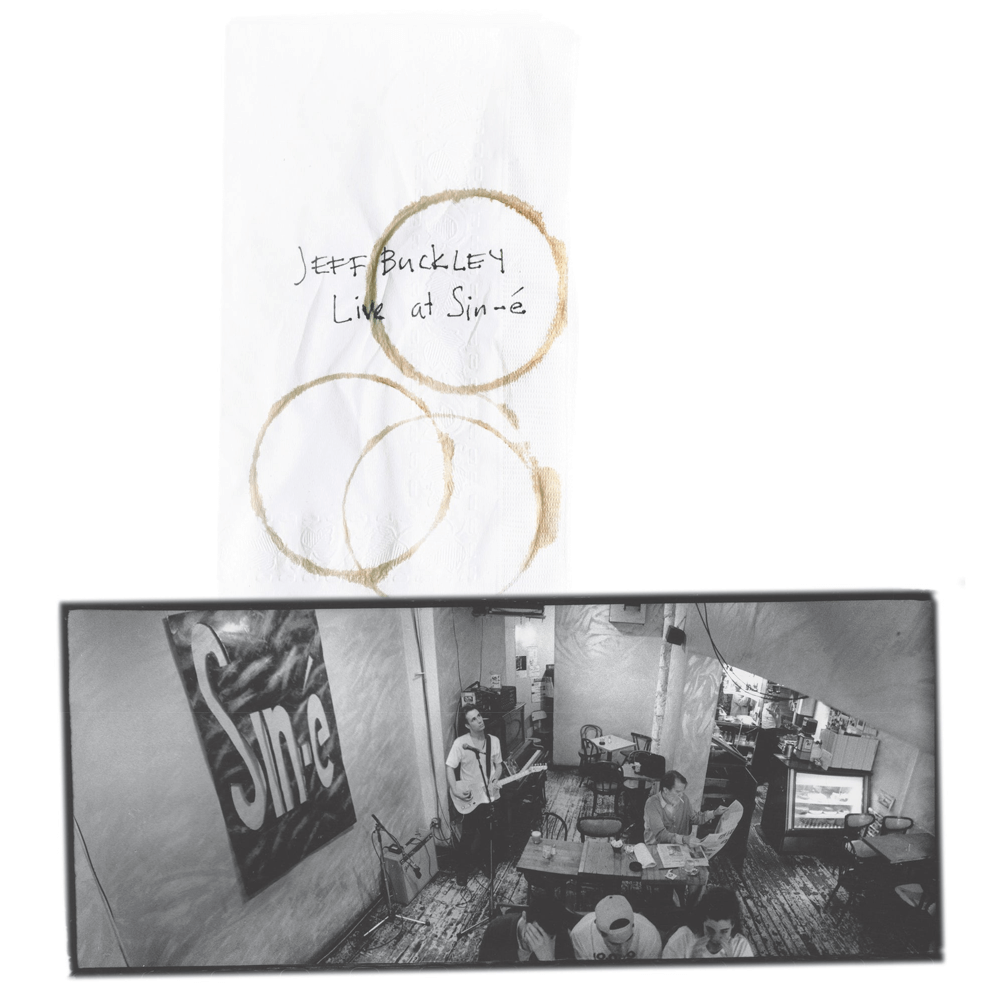
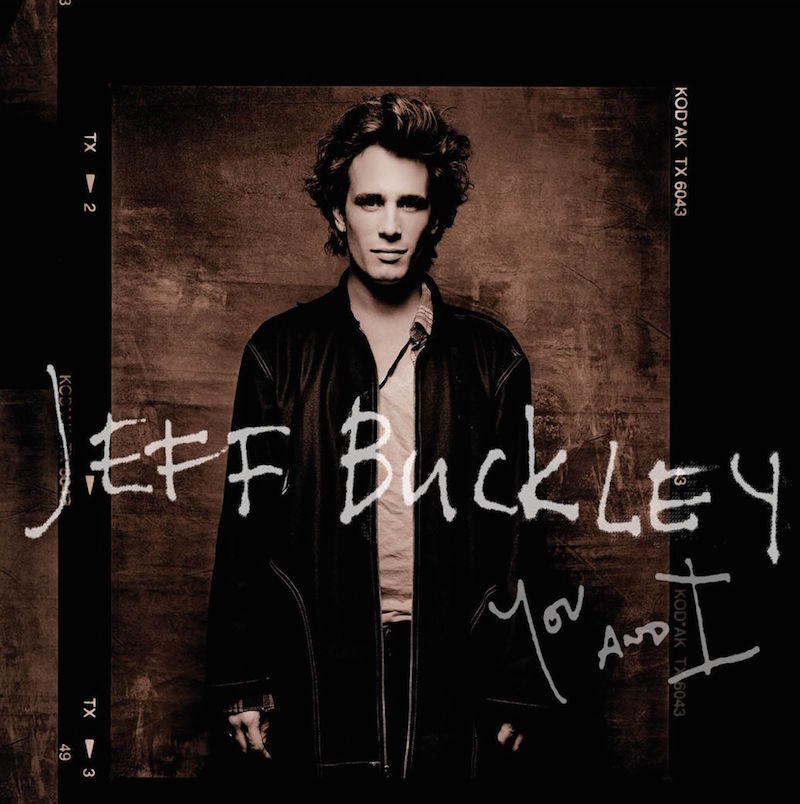

Leaping back to Jeff Buckley’s café days at Sin-é
By NICK TAVARES
STATIC and FEEDBACK Editor
This is truly a privilege. As I write this (at least the first draft), I’m sitting in a desk chair, spun around to face my stereo, while the second LP of Jeff Buckley’s expanded Live at Sin-é spins under the glow of just the right kind of moody light.
I’ve gone through this ritual off-and-on for more than 20 years, but I only recently got my hands on the vinyl version of this masterpiece of an album. Originally released as a four-song EP in 1993, it was expanded into a 34-track, double-CD set in 2003. I got my first copy shortly thereafter, having already ridden the highs of Grace and Sketches for My Sweetheart the Drunk in full for a couple of years.
Relatively speaking, there’s so little material available from his career, so everything has to be cared for and appreciated. His live album Mystery White Boy covered his career on stage. This would document his time before Grace thrust him into a greater spotlight.
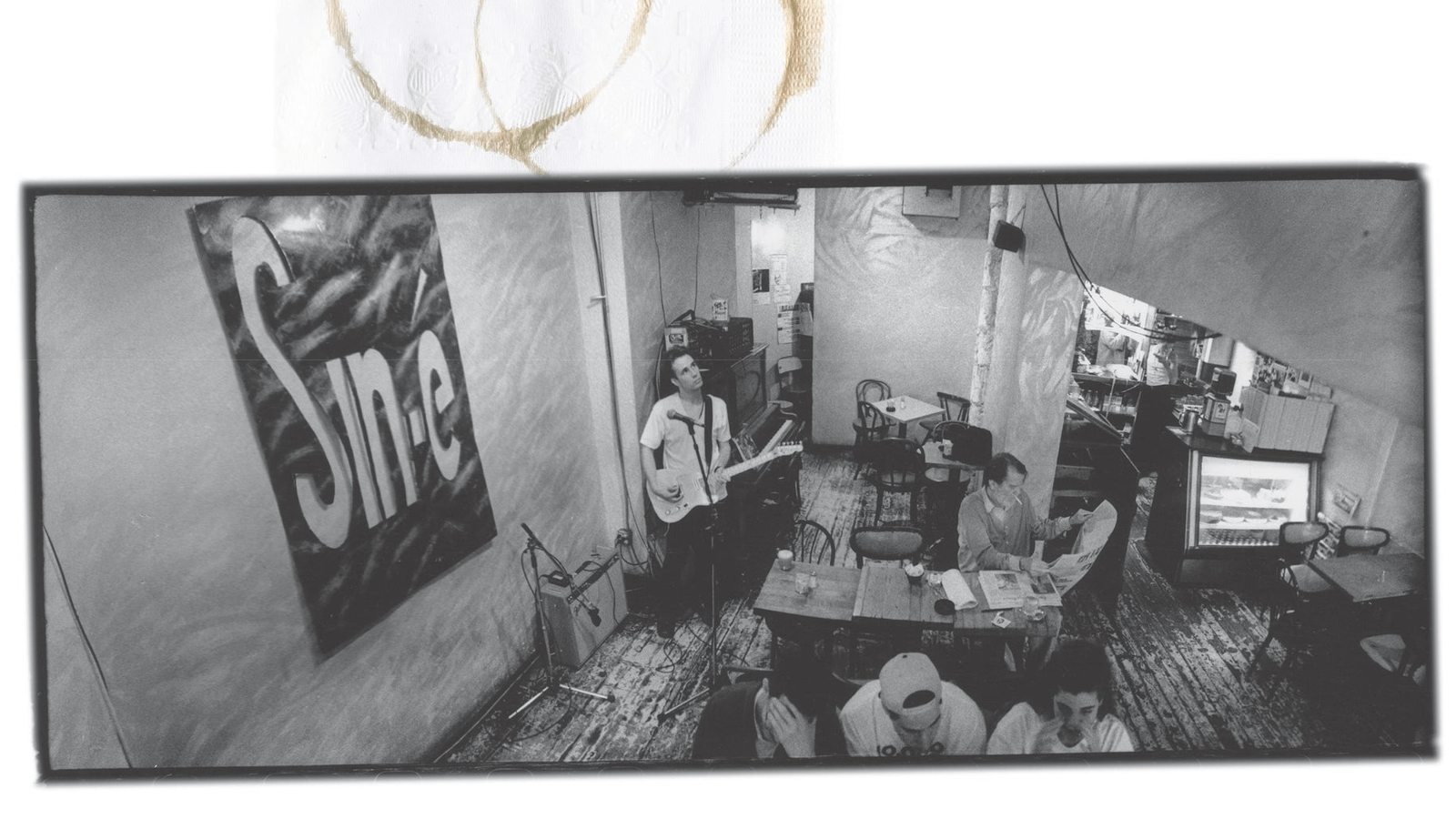
What I didn’t know at the time was how hypnotizing these performances would be. Leaned up against a wall of the venue, Buckley would amble in with a Telecaster every Monday and just start singing songs — some of his own, mostly covers, all enthusiastically rearranged for his distinct tenor.

On these nights in July and August of 1993, continuing his Monday residencies that began the previous year, Buckley set up in one end of downtown New York City’s Sin-é club, with the organic buzz of his previous appearances already at a peak, and spun yarns and sang songs as if the audience were at once intimates and not there at all. It is so natural and flowing a sound that it’s almost alarming. It sounds like it came from nowhere. And in the way Buckley’s career flashed through so quickly and was swept away so unceremoniously, it kind of did.
But, happily documented, this set gives a glimpse of what it would’ve been like to see him in this period before he was officially recording for Columbia and touring theaters around the world. And it provides a window into not just these early days, but also his approach and the songs in progress.
He steps in casually, with percussive stomps supporting an a capella reading on his interpretation of Nina Simone’s “Be Your Husband,” before his solo guitar rings out through that tiny space and sets up his own “Lover, You Should’ve Come Over.” This is the real introduction to the experience that covers his café days in so much reverence, the sound of his voice soaring through, up and over his ringing and emotional guitar playing.
His ability as a guitarist shouldn’t be undersold, either. Ninety-nine times out of a century, the lone wolf in the corner of a bar is strumming an acoustic guitar, with the PA just a little too loud and the entire din drowning out the conversation the occupants were hoping to have. Here, with the reverb and sting of a Fender accompanying him, he turns that on its head, politely silencing the folks enjoying a beer who were no doubt entranced by what they were hearing. The first time he hits those strings is absolutely stunning. His singing voice was unique, of course, but paired with that guitar and that amp at that time, it all combined to create something entirely new, not to be replicated.
In addition to his own work, the album was something of an introduction to other artists for me — a deeper look into Van Morrison, an initial open door to Simone and Nusrat Fateh Ali Khan, an opportunity to reassess what could be done with a Led Zeppelin song I’d listened to hundreds of times by that point. His ability to take something by Zeppelin or even Bob Dylan, completely rearranging and reconstructing “Night Flight” or “Just Like a Woman” to fit his specifications, was and remains unlike anything else I’d heard.
And his comfort in this setting is obvious. He could fumble the key of a song, turn into into a joke, then stun the crowd with “Calling You.” An often-buzzing amp reminds the current listener that this was just some night, and a guy with a guitar, singing while people finished their coffee. He could be completely self-deprecating one moment, somehow aware of the ridiculous nature of standing up and singing and hoping for this to be a productive life as an artist, and then absolutely jaw-dropping the next, confirming every impulse he had and the instinct of every listener who had the good fortune to hear him and know that, for instance, “If You See Her, Say Hello” had never sounded so good.
The original material, of course, confirms what his covers suggest, and here, the likes of “Mojo Pin,” which he introduces as “a song about a dream,” “Grace” and “Eternal Life” seal his place as a significant character and pave a clear path to what was shortly to come with Grace. But most striking to me, then and now, was “Unforgiven,” this early take on Grace's “Last Goodbye.” The way that song builds and soars beyond the tiny confines of the space is almost unbelievable. It’s not conventional in its structure by any measure, and seems to exist outside of time. And to hear him let the song’s story slowly unfold until it explodes in catharsis … there’s just nothing quite like it. It is utter devastation within five minutes and 36 seconds.
Flashing forward from 1993 to today, it’s a good time of year for this record, and certainly, it’s nice to have this one on vinyl, eight side changes and all. While the temperature has crept above freezing for a couple of days, there’s still four feet of snow accumulated outside. There isn’t anywhere else I’d rather be than in the warmth and letting the songs here fill the void.
It would take some time to list every other contender and then give them some arbitrary, in-the-moment ranking, but this might top out any list of my favorite live albums ever. The vibe captured in that café, with Buckley at his most relaxed in the closest to a home setting as he’d ever have in public, serves as a reminder of the greatness that could be lurking in the corner of any little establishment in any city.
So I can sit here now, finally, with the LPs on my turntable. I can make a cup of tea or coffee, I can lean back in my chair, I can dim the lights and close my eyes. But I’m not there, necessarily. I’m not quite here, either. I’m in a world that’s conjured whenever this album plays, which is a magic unto itself that can’t be underestimated.
Feb. 15, 2026
Email Nick Tavares at nick@staticandfeedback.com