


25 years into the next 20th century with Father John Misty
By NICK TAVARES
STATIC and FEEDBACK Editor
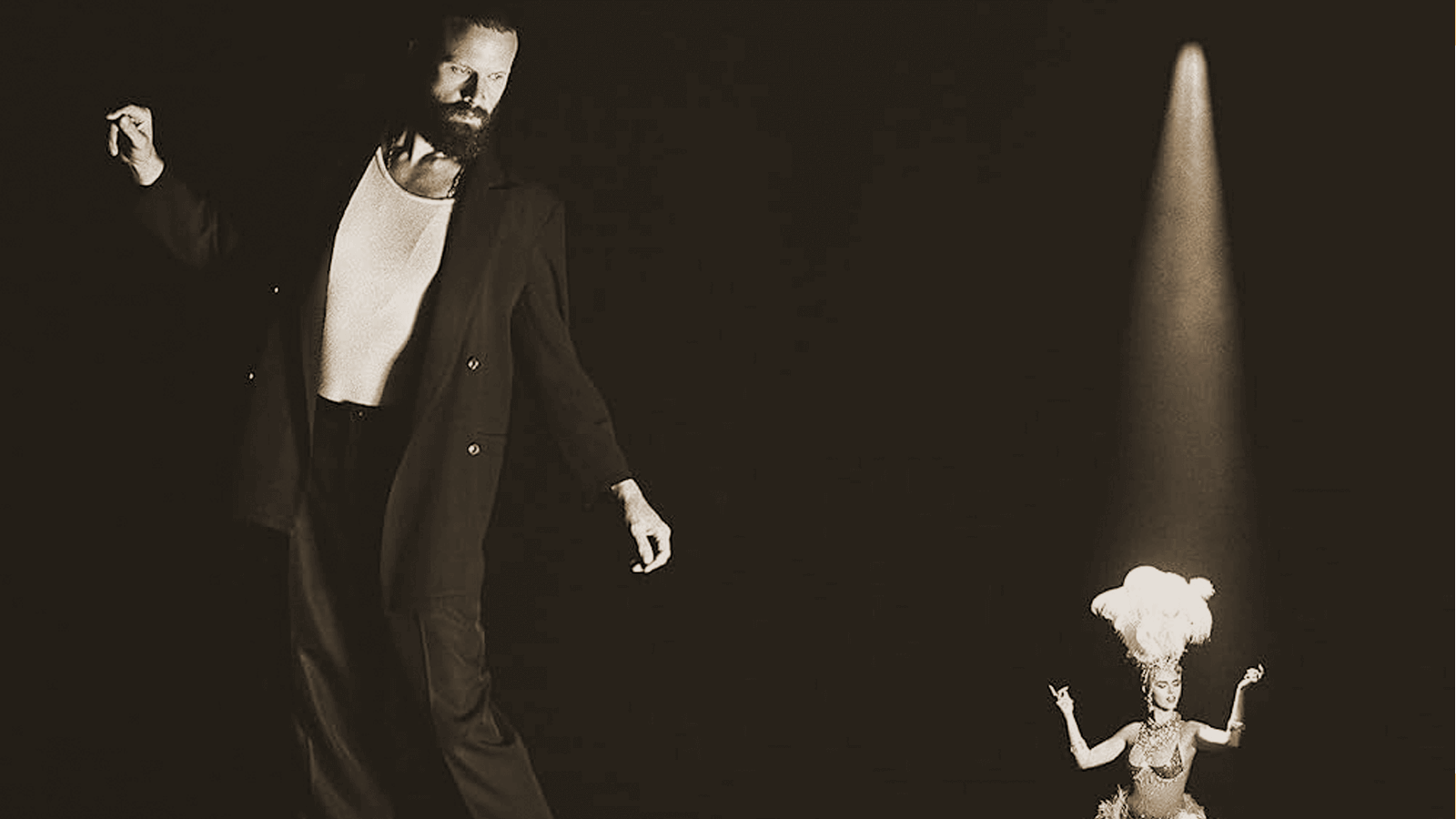
Apologies if the following thousand-or-so words on a song that came out three years feels indulgent, but if ever a song deserved that kind of treatment, and if ever a moment and song were more perfectly joined for such an occasion, then Father John Misty’s “The Next 20th Century” calls for that.
When this first arrived as the concluding track on Father John Misty’s fourth album, Chloë and the Next 20th Century, it got overshadowed a bit by all the early 20th century jazz sounds of the rest of the record. But after 10 songs, that all gives way to a striking and modern look at the world and relationships and time and how all these things meld together.
And it starts at a wedding, of all places:
"The Nazis that we hired
For our wedding band
Played your anthem like I wasn't there
For the father-daughter dance..."
It’s such a sudden and strange contradiction, either consciously hiring a group of Nazis to provide the entertainment that night or, more likely, hiring an otherwise nondescript band and having these neofascists appear. And not switching the music to a phone and bluetooth speaker immediately.
But the first hundred-or-so times I heard this, I heard it as “Played ‘Anthem’ like I wasn’t there, referencing Leonard Cohen’s latter-day masterpiece. Father John Misty (née Josh Tillman) had covered this for a Sub Pop single two years earlier, and I imagined it as if the band (of Nazis, remember) called an audible and switched the song to this one, specifically to taunt him.
And therein lies another message and another interpretation. As Cohen himself, and Tillman later, sings:
"Ring the bells that still can ring
Forget your perfect offering
There is a crack, a crack in everything
That's how the light gets in"
I feel like, if anything can be gleaned from the many character sketches poking through the arcane orchestration of this entire album, it’s by the light getting through all these new miserable experiences.

Just holding the record, and inspecting it’s Paramount-esque labels on one disc while the other makes its rotations on the turntable, is an opportunity for engagement. Rather than the artist or tracks or release information, it’s the lyrics to “The Next 20th Century” scattered across its four stickers. And the words that close the bottom of Side A are as striking as any:
“Now we’ve got all the love to pay for like a thousand different wars.”
The notion of someone’s personal relationship history bubbling up like decades of tensions in Europe or the Middle East or the Americas, as if it’s possible for the present to answer for the past, is so immediate. Never mind that, out there in the real world, there are folks glorifying Nazis as some kind of answer to a problem they continue to exacerbate, there’s also the notion of having to wrestle with personal history and past choices, good or bad, and resolve them to the current moment that is acceptable and livable and, ultimately, positive. It’s no simple task.
But in between wars, there’s the simple mundane movement from day today, if we’re lucky. And in that movement, we can find ourselves in places and moments that may seem absurd and cause a startling level of reflection. Like when, through the fluid circumstances of both principals, Tillman found himself in a house previously owned by Val Kilmer, and suddenly imagines their two lives dovetailing as he stares in the mirror:
“Well I’m sure he’s someone else now, but he was Batman when he lived here.”
Who, after a few spins through the cycle, hasn’t looked back and thought, “I don’t really recognize that guy anymore?” I remember some of his jokes and likes and dislikes and general lack of fashion sense, sure. And a lot of the bands that guy liked, well, this guy still likes. But the gulf is deep and wide. He made decisions for good and bad that I don’t think I would’ve made. He had friends I don’t speak to anymore, because of their decisions or mine. He had this whole other life that, other than informing this one, doesn’t register anymore.
The “he” in the prior paragraph, of course, is me. Tillman is himself, and of him I only know the scant bit I can glean from the songs. Kilmer is on another plane now, dealing with a whole host of new circumstances we can’t imagine, if we even believe in the concept of that kind of existence.
And these are the kinds of thoughts that fill my head while I read the label on the second LP and listen to the song play in my head as I follow the clashing fonts of its retrofitted design.
It’s also difficult to listen to all this and be at all aware of the world outside the windows and be okay with any of it.
Perhaps you’re the type of person who can read the news and, if not be absolutely delighted in the day-to-day horror, think that this is all just part of a cycle and that it’ll all be okay. And maybe it is all part of a cycle, and that this particular tornado hasn’t touched down on your specific life yet, so that this should all be fine in the long run.
Adorable as that thought is, it’s childish at best. This has been a hell of a year, inside and out. A hell of a couple of years, really. And if you’re the type that’s someone cool with all this, then congratulations on finding this space and these words, but they aren’t for you.
Father John Misty’s “The Next 20th Century” might be his greatest accomplishment yet in song, because it captures these emotions, external and internal, notices the horrifying pattern in it all and finds the same kind of solace in the music’s ability to navigate all the nonsense:
“I don’t know about you, but I’ll take the love songs
And give you the future in exchange..”
We all have our challenges, at work, at home, otherwise. We have our beliefs and we have to square those with the beliefs of those that run directly counter to all this. There never seems to be any meeting place where everything remains okay for more than a few hours. But in those solitary moments, the music is there to do its part and help guide us through all the ruckus.
“I don’t know about you, but I’ll take the love songs
If this century’s here to stay.”
Two years ago, at the tiny Columbus Theatre in Providence, R.I., I went with a friend to see Father John Misty take all this on the road. I’d seen him just as the album had come out the previous fall, but now, with some time and miles under his belt, and moving from a cold September night in an outdoor venue to a warmer, more intimate environment, he had a chance to really open up and let the music have its moment.
When the lights went down, the band walked out and a programmed drum beat rang out through the room. Tillman strutted out with the swagger of Jim Morrison and the grounded wisdom of Michael Stipe. He stepped to the microphone, and opened with “The Next 20th Century.”
“I know you love me, but say you love me before you go.”
We’re now a quarter of the way through this new 20th century, with all the nightmares of the previous one still present but somehow upscaled and better distributed through every horrible, viral means possible. People are trying, but things still seem to stay just barely manageable, as if every new task is greeted with an extra layer of difficulty that’s also treated as a new and improved feature of some kind.
Maybe this is age talking, and the weight of these past few years feeling a little bit heavier all the time, but music is still the best therapy and best escape I’ve found. If it’s putting on the headphones or picking up the guitar, within those few moments of the song, all the noise seems to disappear. And when it’s over, the feeling lingers long enough to give those clouded moments some new clarity and another way forward.
If you’ve made it this far into this rambling excuse for a cohesive piece, thank you. It’s been a different challenge for everyone, but a challenge all the same. And if the music can provide a little bit of solace and, within that, a bit of community, I’ll gladly take it and be grateful for anyone that tagged in along the way.
And, Mr. Tillman, sir, agreed. I’ll take the love songs if this century’s here to stay. I’ll take the love songs and the great distance that they came…
Dec. 31, 2025
Email Nick Tavares at nick@staticandfeedback.com